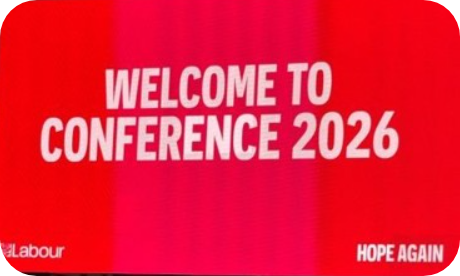
A Moment for Renewal: Reflections on Andy Burnham’s Labour Conference Speech and the Case for Democratic Reform
Andy Burnham’s speech to the Labour Party Conference in Liverpool was significant not simply because it was his first major conference address as Prime Minister, but because it attempted to confront some of the difficult questions that have been left unresolved in British public life for many years. What I heard was a call for a different kind of politics: one prepared to acknowledge difficult realities, to discuss difficult choices honestly and to look beyond the immediate political cycle. After more than five decades of involvement in public and political life, I have learned that governments are ultimately judged not by the ambition of their speeches but by whether they improve people’s lives, strengthen communities and leave the country in a better condition for the generation that follows. That is why I listened to the Prime Minister’s speech not simply as a former Labour Member of Parliament, but as someone who has spent much of his life believing that politics can be a force for service, fairness and democratic renewal.
A country asking for honesty
Britain is facing a complicated combination of pressures. Families are concerned about the cost of living. Young people are asking whether they will be able to afford a home and build a secure future. Our health and social care services continue to face enormous demands. Businesses want greater certainty and the conditions in which they can invest, employ and grow. Local government is under pressure, while many communities feel that decisions affecting their lives are made too far away from them. At the same time, confidence in politics and political institutions has been weakened. These problems cannot be solved by pretending that there are easy answers. One of the more important features of Andy Burnham’s speech was his willingness to describe some of these issues as difficult choices. His proposals included major changes in social care, a different approach to the pensions triple lock, closer engagement with Europe, changes in public ownership and a process towards electoral reform. Each of these subjects will require detailed examination. There will be legitimate disagreements about priorities, costs, implementation and timing. That is precisely what democratic politics should allow. A mature democracy does not require everybody to agree. It requires people to be able to disagree honestly, respectfully and constructively. That principle has guided much of my own public life.
Electoral reform: a cause that has been close to me for decades
Of all the issues raised in the speech, electoral reform has a particularly personal significance for me. My involvement in the campaign for electoral reform did not begin recently. For many years I have been associated with the Labour Campaign for Electoral Reform (LCER) and served for many years on its Executive Committee. I have believed throughout that our democratic institutions must keep pace with the society they serve. The question is not simply about changing a voting system. It is about the relationship between citizens and the institutions that represent them. When I entered public life, the political landscape was different. Political loyalties were often more predictable, the number of significant political parties was smaller, and the relationship between communities and political parties operated in a different environment. Britain today is much more diverse — socially, economically, geographically and politically. People have a wider range of political views and affiliations. Communities that once felt that their political identity could be represented through one of the major parties may now support a range of parties or independent candidates. Our electoral arrangements therefore deserve serious examination. That does not mean that there is only one possible answer. Nor should electoral reform be designed to benefit any particular political party. It should begin with a fundamental democratic question: Does the system enable the people of Britain to see their votes, voices and communities fairly reflected in Parliament? That is why I welcome the Prime Minister’s proposal for a national commission to examine electoral reform and the commitment to develop a future manifesto position following that process. The announcement represents an opportunity for a serious national conversation rather than a rushed argument about party advantage. (The Guardian)
There is a danger whenever electoral reform is discussed that the conversation becomes an argument between political parties about who might gain or lose seats. That is the wrong starting point. The starting point should be the citizen. A young person voting for the first time should feel that their participation matters. A pensioner who has voted throughout their life should feel that their vote remains meaningful. Someone living in a large city should have confidence that their political voice counts. Someone living in a small town, a rural community or a coastal constituency should have the same confidence. People from ethnic minority communities, people with disabilities, working people, entrepreneurs, students, renters, homeowners and those who have traditionally felt disconnected from politics should all be part of the conversation. Democracy should not be something done to people. It should be something built with them. This is why the proposed commission has an important role. It should examine the evidence, listen widely and consider the different models that operate within the United Kingdom and elsewhere. It should hear arguments both for and against proportional systems, consider the continuing importance of the constituency link, and examine how representation can be combined with accountability. There should be no assumption that reform means abandoning the relationship between an individual Member of Parliament and a local community. Indeed, in my own experience as an MP for Ealing Southall, that relationship was fundamental. People did not come to my office because they wanted an abstract representative. They came because they wanted someone to listen, understand their circumstances and help them navigate public institutions. Whatever electoral system we eventually choose, that human connection must remain at the heart of parliamentary democracy.
Representing Ealing Southall for five terms was one of the greatest responsibilities of my life. It taught me that democracy is not confined to Westminster. Democracy is present in the constituent who comes to a surgery because their housing situation has become unbearable. It is present in the family worried about a child’s education. It is present in the business owner trying to keep people employed. It is present in the community organisation seeking support. It is present in the elderly person who simply wants someone to listen. Before entering Parliament, I had already spent many years in local government and community service. I served as an Ealing councillor for many years, including as Mayor of Ealing, and worked with voluntary organisations, community groups and public services. Those experiences shaped my understanding of public service. They taught me that politics is not primarily about winning arguments. It is about solving problems.
Social care is a test of political courage
The Prime Minister also placed social care at the centre of his vision. This is an issue I believe Britain has postponed for far too long. Almost every family will, at some stage, encounter the reality of caring for an elderly relative, a disabled family member or someone whose independence has been reduced by illness or age. Yet our national discussion about social care has too often been fragmented. We discuss funding one year, workforce pressures another year and NHS pressures separately, when in reality they are deeply connected. The distinction between health and social care may make sense administratively, but it does not always make sense to the family trying to care for a loved one. Any serious reform must therefore consider dignity, accessibility, workforce conditions, funding and the relationship between the NHS, local authorities, families and care providers. The Prime Minister has placed a national care service among his longer-term ambitions. That is a major undertaking, and its financial and practical implications will need to be properly examined. (The Guardian) But the principle of asking how we want an ageing society to care for its citizens is one that deserves a national conversation.
Economic policy must also be understood through the lives of ordinary people. Economic growth is not merely a figure in a Treasury document. It means whether a young person can find a worthwhile job. It means whether a small business can survive. It means whether an entrepreneur can obtain finance. It means whether a family can pay its bills. It means whether a community has thriving high streets rather than empty premises. Having spent many years speaking with small businesses and community organisations, I know that entrepreneurs often want something quite simple from government: stability, fairness, sensible regulation, access to skills and confidence that their investment will not be undermined by constant uncertainty. Government cannot create every successful business. But it can create the conditions in which enterprise can flourish. This is especially important outside London. Britain needs growth in every region and nation, not only in those places that have traditionally benefited most from investment.
Britain and Europe
The Prime Minister’s remarks about Britain’s relationship with Europe also deserve a mature discussion. Brexit changed Britain’s relationship with our nearest neighbours, trading partners and allies. Whatever people’s views of the original decision, the question today must be practical: how do we maximise Britain’s opportunities while respecting the democratic choices that have been made? Trade, education, research, security, culture and movement between countries all matter. Britain should be confident enough to engage with Europe without constantly turning the relationship into a question of political identity. The same principle should apply internationally. Britain remains a country with global responsibilities and global connections. Our relationship with India, the Commonwealth, Europe, the United States and countries across Asia, Africa and the wider world should be based on mutual respect, trade, education, security and human relationships. My own experience of the UK–India relationship has reinforced my belief that diplomacy is not only conducted by governments. It is also built through students, businesses, community organisations, cultural exchanges and millions of people whose lives connect two countries.
Equality and belonging
Another responsibility of political leadership is to ensure that people feel they belong. I came to Britain in 1968. Like many migrants of my generation, I came to a country in which we had to build our lives, work hard and contribute to our communities. I began my working life as a bus conductor and booking clerk. I subsequently worked in local government, community organisations and public service before entering Parliament. My own journey is inseparable from the story of modern Britain. It is a story of migration, hard work, opportunity and service. But it is also a story of people learning to live together. Britain’s diversity should not be treated simply as a demographic fact. It is part of our national story. The challenge for political leadership is to ensure that diversity strengthens rather than fragments our society. That requires equality before the law, respect for different traditions, freedom of religion and belief, and a common commitment to democratic values. We should never allow community identity to become a substitute for citizenship. Our first responsibility is to Britain and to one another.
After leaving Parliament in 2024, I have had time to reflect on what public service means when one is no longer holding elected office. The title of Member of Parliament eventually ends. The responsibility to one’s community does not. I remain committed to the values that have guided me for more than five decades: equality, secularism, unity, fairness, education, human rights and social justice. I also remain convinced that politics needs people who understand that public office is temporary, but public service is lifelong. That is why I listened carefully to the Prime Minister’s words about changing the way politics operates. Britain does not need politics permanently trapped in confrontation. It needs disagreement, certainly. It needs scrutiny. It needs a strong opposition and an independent media. But it also needs the ability to find common ground when the national interest requires it.
A message to the Prime Minister
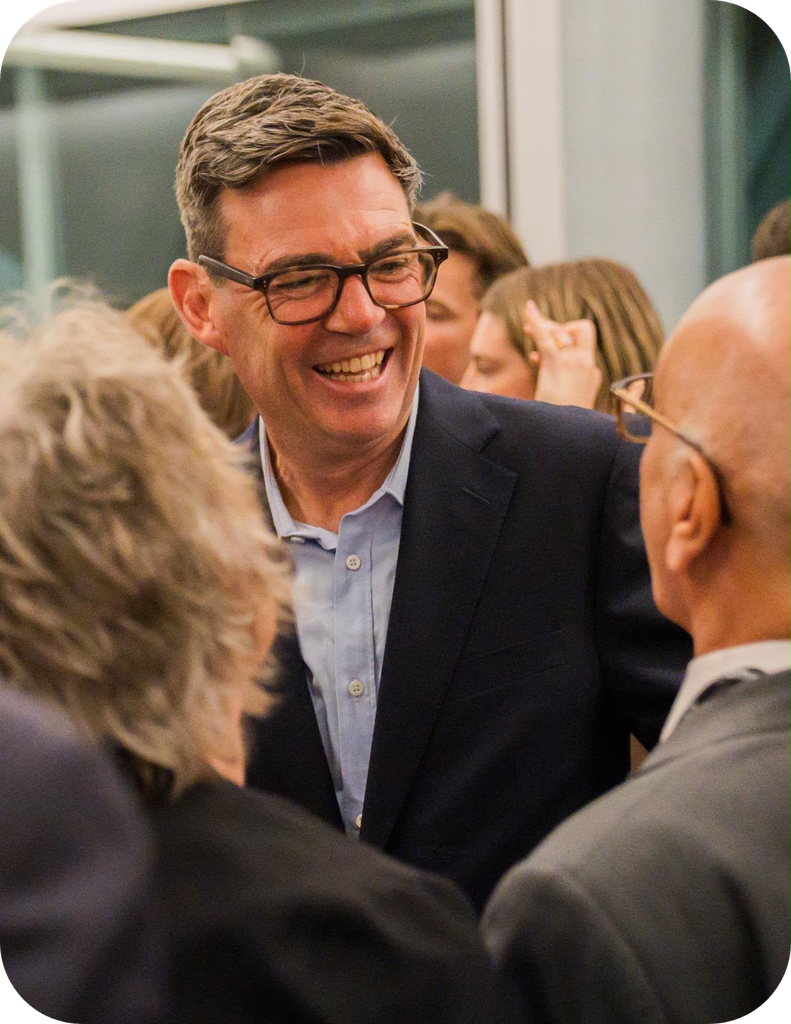
Andy Burnham has taken responsibility for leading the country at a difficult time. The scale of the challenges before any Prime Minister is considerable. I therefore believe that those of us who have served in public life should contribute constructively where we can. Support for a government should not mean abandoning independent thought. Nor should criticism mean refusing to recognise good ideas. There is a middle ground: constructive public service. I would encourage the Prime Minister to continue engaging with people beyond the immediate political circle — former parliamentarians, local government leaders, community organisations, business leaders, trade unionists, academics, young people and citizens who do not normally have access to political decision-makers. The experience of those who have served should not be treated as belonging only to the past. There is knowledge accumulated through decades of public service that can still be useful. I say this not as a request for office, but as an expression of willingness to contribute. If there are opportunities where my experience in Parliament, local government, community relations, international engagement, electoral reform and the UK–India relationship can be of constructive value, I remain available to serve. I have never regarded public service as belonging exclusively to elected office.
The electoral reform debate provides an opportunity to think beyond the mechanics of voting. We should consider the health of democracy as a whole. How do we encourage young people to participate? How do we rebuild trust? How do we ensure transparency in political funding? How do we protect elections from improper interference? How do we ensure that Parliament represents the country it serves? How do we strengthen local government? How do we make politics accessible to people who do not have established political connections? These questions belong to the whole country. Recent parliamentary debate has demonstrated significant interest in examining the existing first-past-the-post system, while there are also legitimate arguments from those who wish to retain it. A national commission can provide a structured way of examining these competing arguments rather than allowing the issue to become simply another partisan dispute. (The Guardian) My own long involvement with LCER has convinced me that electoral reform is ultimately a democratic question, not merely a party question. If we change the system, we must do so carefully. If we retain it, we must understand and openly address its consequences. Either way, the public deserve an informed national debate.
Perhaps the most important question arising from the Prime Minister’s speech is what kind of country we want to leave to the next generation. When I first became involved in public service, politics was often conducted through physical meetings, community organisations, trade unions, local parties and face-to-face conversations. Today, politics is also conducted through social media, instant communication and an information environment in which facts and misinformation can circulate at extraordinary speed. The next generation will face challenges that we cannot fully predict: artificial intelligence, climate change, demographic change, new forms of work, international insecurity and rapidly changing technology. They will need institutions capable of adapting. That means political reform should not be undertaken merely because the present system is unpopular. It should be undertaken because we want institutions capable of serving the Britain of tomorrow.The most enduring political leaders are not those who believe they possess all the answers. They are those who recognise the scale of the responsibility they carry. Leadership requires confidence, but also humility. It requires the courage to change course when circumstances demand it. It requires listening to people who disagree. It requires explaining difficult decisions rather than hiding them behind slogans. And it requires remembering that every policy ultimately affects a human being. That is the standard against which I have always tried to judge public life.
Looking forward
Andy Burnham’s conference speech has opened a broad discussion about the future direction of Britain. The proposals will need scrutiny. The financial implications will need examination. The constitutional questions will need careful consideration. And the public will ultimately have the opportunity to make their own judgments. But I believe the conversation itself is important. Britain needs a politics that is confident enough to discuss difficult subjects and humble enough to listen. It needs an economy that provides opportunity. It needs public services that treat people with dignity. It needs communities that feel secure and included. It needs stronger local democracy. And it needs democratic institutions that command public confidence. For me, electoral reform remains an important part of that conversation. Having spent many years campaigning through the Labour Campaign for Electoral Reform and serving on its Executive Committee, I know that changing an electoral system is neither simple nor sufficient on its own. Democracy depends upon much more than the method by which votes are counted. It depends upon integrity. It depends upon participation. It depends upon accountability. It depends upon respect. And above all, it depends upon a belief that public life exists to serve the public. I entered public life with that belief more than fifty years ago. I leave elected office with the same belief. I remain proud of the opportunity I had to represent Ealing Southall for five terms. I remain grateful to the constituents, colleagues, community organisations and countless individuals who taught me what public service really means. My political career may have entered a different chapter, but my commitment to service has not ended. If the country is entering a period of democratic and social renewal, those of us with experience have a responsibility to contribute constructively where we can. I therefore welcome the Prime Minister’s willingness to confront difficult questions. I welcome the opening of the conversation on electoral reform. And I hope that the national discussion that follows will be conducted with seriousness, evidence, humility and respect. Britain has changed enormously during my lifetime. The task before us now is to ensure that our democracy, our economy and our public institutions change with it — while preserving the values that bind us together. Service should never be about what public life can give us. It should always be about what we can give to public life. That is the principle that has guided me throughout my life. And, it remains my guiding principle today.
Virendra Sharma
Member of Parliament 2007-2024