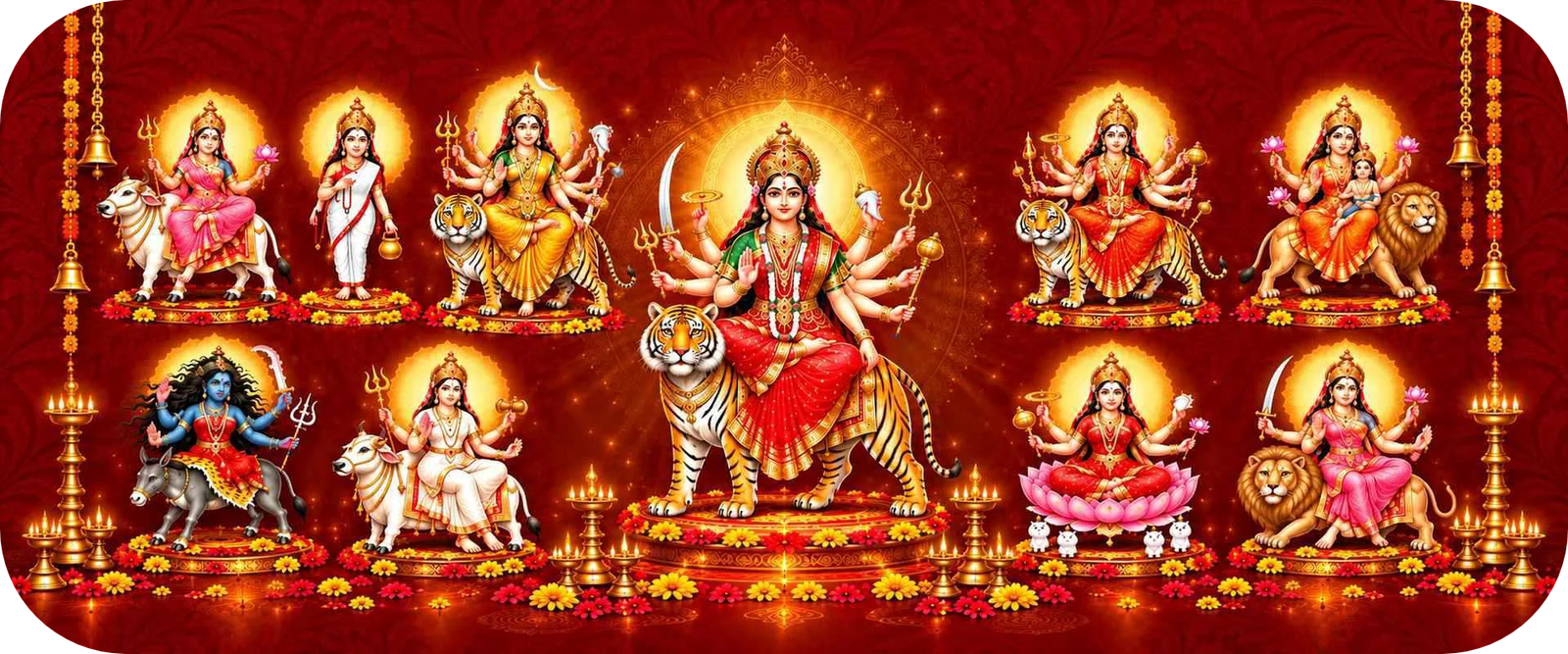
ॐ जयंती मंगला काली भद्रकाली कपालिनी। दुर्गा क्षमा शिवा धात्री स्वाहा स्वधा नमोस्तुते।।
Om Jayanti Mangala Kali Bhadrakali Kapalini. Durga Kshama Shiva Dhatri Swaha Swadha Namostute
रूपं देहि जयं देहि यशो देहि द्विषो जहि॥
During Navaratri, the nine nights dedicated to the worship of the nine forms of Goddess Durga, it is rare not to hear or recite these verses, mantr or shlok from the Durga Saptashati, one of the most revered texts in the worship of the Divine Mother.
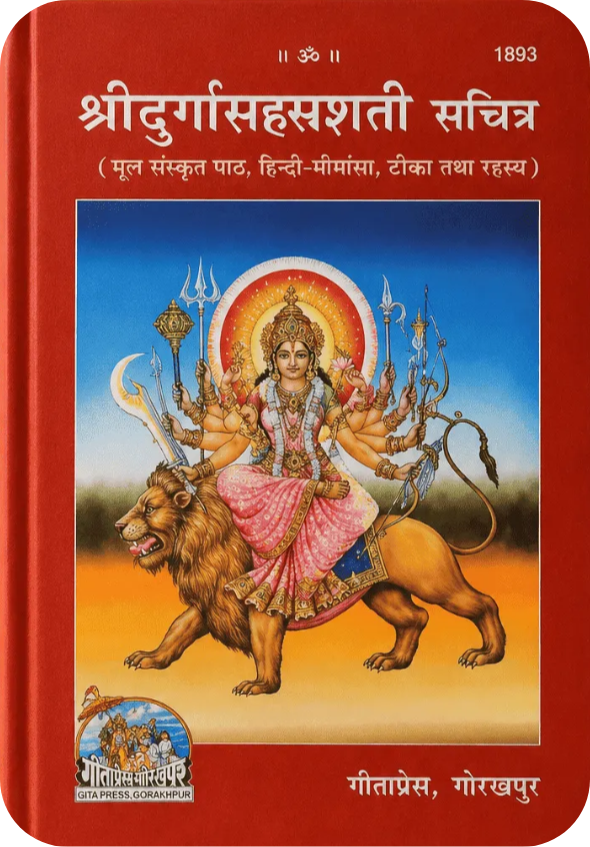
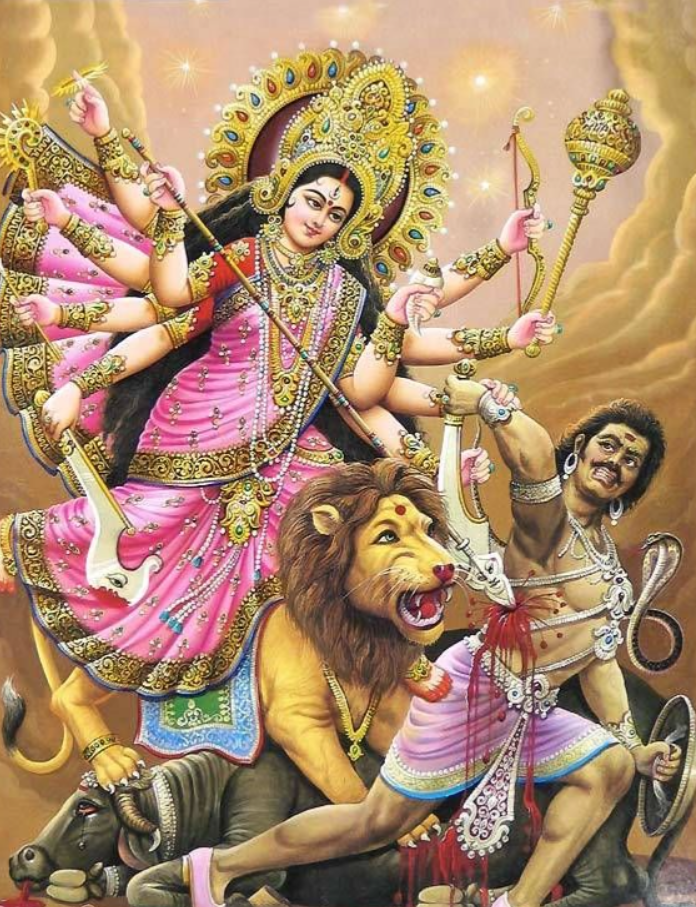
The Durga Saptashati is a collection of approximately 700 verses from the Markandeya Purana. It consists of thirteen chapters, along with several well-known hymns and prayers, including the Kavach, Argala Stotra, Keelak Stotra and Kunjika Stotra. Goddess Durga riding a lion symbolises courage. The weapons she carries remind us of the struggle against injustice. Her maternal form represents compassion and protection. Her victory over Mahishasura inspires us with the timeless truth that, no matter how powerful arrogance and oppression may appear, truth, courage and collective determination can never lose their importance.
The Devi Aparadha Kshamapana Stotra teaches us humility, restraint and the importance of approaching the Divine with sincerity. One of its most moving verses expresses the devotee’s admission of spiritual limitations:
न मन्त्रं नो यन्त्रं तदपि च न जाने स्तुतिमहो Na mantram no yantram tadapi cha na jaane stutimaho,
न चाह्वानं ध्यानं तदपि च न जाने स्तुतिकथाः Na chahvaanam dhyaanam tadapi cha na jaane stutikathaah.
न जाने मुद्रास्ते तदपि च न जाने विलापनं Na jaane mudraaste tadapi cha na jaane vilaapanam,
परं जाने मातस्त्वदनुसरणं क्लेशहरणम्॥ Param jaane maatas tvadanusaranam klesha-haranam.
The meaning is simple yet profound:
“O Mother, I do not know the sacred mantras or yantras. I do not know how to praise You properly, invoke You, meditate upon You or recount Your divine stories/katha. I do not know the ritual gestures of worship or the words of heartfelt supplication. O Mother, there is only one thing I know: taking refuge in You brings relief from all suffering.” The same stotra contains another much-loved sentiment: a child may be unworthy, but a mother can never cease to be a mother. It reflects the boundless compassion of the Divine Mother and the reassurance that sincere devotion is welcomed even when it is imperfect.
During Navaratri, the recitation of the Durga Saptashati can be heard in temples and homes. Lamps are lit, the Chandi Path is performed, and devotees offer their prayers and aspirations at the feet of the Goddess. Yet the significance of this sacred text extends far beyond religious ritual. It offers a profound spiritual framework for understanding the struggles within the human mind, the evils present in society and the eternal conflict between righteousness and unrighteousness.
Just as the Bhagavad Gita is regarded as a supreme text on the yoga of action, the Durga Saptashati is considered one of the foremost scriptures of Shakti worship.
In our own time, technological progress has brought remarkable opportunities, but it has also accompanied challenges such as mental stress, social inequality, violence, moral uncertainty and insecurity. The message of the Durga Saptashati remains deeply relevant in addressing these concerns.
The text presents the worship of the Divine Power through 700 verses. Although it describes the Goddess in her manifested forms, it also conveys a profound understanding of the formless nature of the Divine.
In its opening chapter, Sage Medha explains that the Goddess dwells within all living beings and that the entire universe is her creation. She is the power through which beings become attached to worldly existence, and it is through her grace that they can be liberated from that attachment.
This teaching invites us to recognise the divine presence within all creation. Everything in the universe is understood through the five elements, and the consciousness that animates living beings reflects the presence of the Divine Mother.
To recognise and honour this consciousness in all beings is, therefore, to understand a deeper dimension of worship. When we grasp this principle, the study of the Durga Saptashati becomes a path towards genuine spiritual growth.
The Kunjika Stotra is regarded as a powerful and esoteric hymn within the Durga Saptashati, traditionally associated with seeking the grace of Goddess Durga. It is often described as a condensed form of the sacred text, containing its essential spiritual power. Its recitation is traditionally believed to offer benefits associated with the complete recitation of the Durga Saptashati.
The stotra/hyumn reminds devotees that spiritual practice need not always be measured by its length. Faith, concentration and sincerity are central to the experience of devotion. Beyond its devotional significance, the Kavach also represents the human desire for strength, security and the courage to face life’s difficulties.
The word Argala means a door bolt or latch. Just as a door must be opened before one can enter, the Argala Stotra is traditionally understood as opening the way to the grace of the Divine Mother. Its recurring prayer expresses the devotee’s aspirations:
रूपं देहि जयं देहि यशो देहि द्विषो जहि॥ Roopam dehi, jayam dehi, yasho dehi, dvisho jahi.
“O Mother, grant me beauty, grant me victory, grant me honour, and destroy my enemies.” The verse expresses a desire for success, dignity and freedom from opposition. Read at a deeper level, it can also encourage devotees to seek the strength to overcome the obstacles that prevent them from living with courage, integrity and purpose.
The word Keelak means a nail or fastening. Within the tradition of the Durga Saptashati, the Keelak Stotra is associated with unlocking or releasing the power of the sacred mantras so that the devotee may receive the full benefit of spiritual practice.
It forms an important part of the traditional recitation associated with the Durga Saptashati, emphasising preparation, discipline and sincere engagement with the sacred text. Together, the Kavach, Argala Stotra and Keelak Stotra establish an important foundation for the devotional recitation of the Durga Saptashati.
These narratives describe the Goddess’s battles against forces of evil and the restoration of righteousness.
1. Prathama Charitra: The Manifestation of Mahakali
Chapter 1: The Destruction of Madhu and Kaitabha
The opening chapter describes the emergence of Mahakali to destroy the demons Madhu and Kaitabha, who arose while Lord Vishnu was in yogic sleep. Their destruction represents the defeat of destructive forces that threaten cosmic order.
2. Madhyama Charitra: The Manifestation of Mahalakshmi
Chapter 2: The Destruction of Mahishasura’s Army
Oppressed by Mahishasura, the gods combine their divine energies, from which Goddess Durga manifests. The chapter describes the fierce battle between the Goddess and the demon’s army.
Chapter 3: The Slaying of Mahishasura
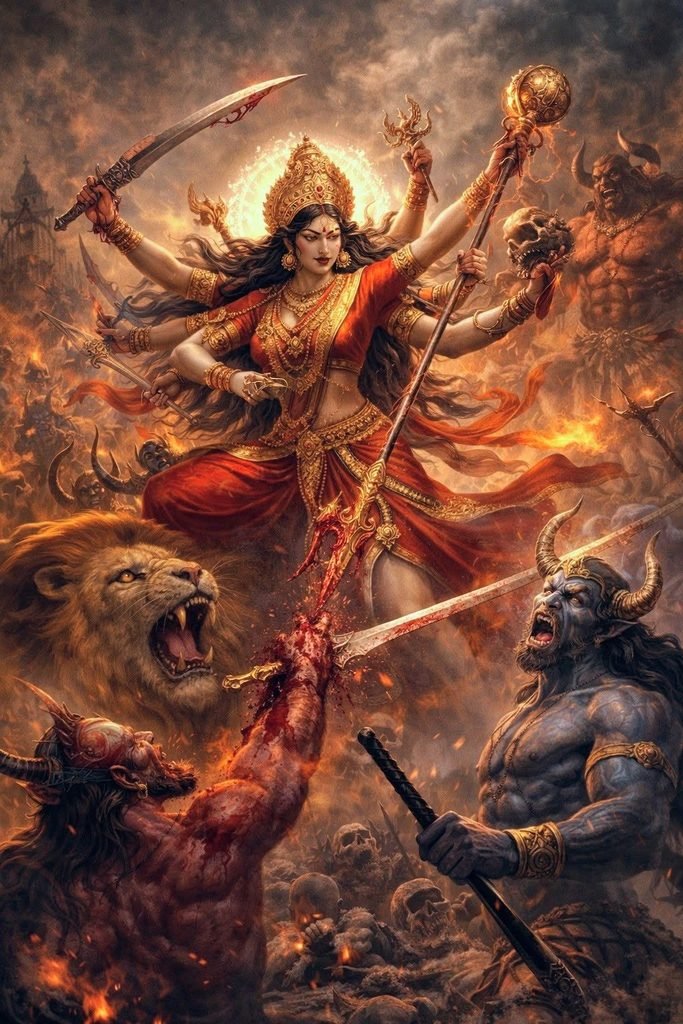
Goddess Durga assumes a formidable form and defeats Mahishasura’s commanders before ultimately destroying Mahishasura himself. Her victory symbolises the triumph of righteousness over arrogance and oppression.
Chapter 4: The Stotra/Hymn of Praise by Indra and the Gods
Following Mahishasura’s defeat, Indra and the other gods praise the Goddess in gratitude. This celebrated hymn, also known as the Shakradi Stuti, honours her power and protection.
3. Uttama Charitra: The Manifestation of Mahasaraswati
Chapter 5: The Gods Praise the Goddess
Troubled by the oppression of Shumbha and Nishumbha, the gods travel to the Himalayas to praise Goddess Parvati. The Goddess manifests in a beautiful form known as Ambika. Shumbha sends his messenger Sugriva with a marriage proposal, which she refuses.
Chapter 6: The Destruction of Dhumralochana
When the demon Dhumralochana attempts to seize the Goddess by force on Shumbha’s orders, she destroys him with a single roar, while her lion attacks and defeats the remaining demons.
Chapter 7: The Destruction of Chanda and Munda
When the demons Chanda and Munda attack the Goddess, the fierce Goddess Kalika, or Kali, emerges from her forehead. She kills both demons and receives the name Chamunda.
Chapter 8: The Destruction of Raktabija
The Goddess faces the formidable demon Raktabija, whose every drop of blood falling to the ground produces another demon. Goddess Kali drinks his blood before it can touch the ground, ultimately bringing about his destruction.
Chapter 9: The Destruction of Nishumbha
This chapter describes the fierce battle between the Goddess and Nishumbha, the brother of the demon king Shumbha. Goddess Durga ultimately defeats him.
Chapter 10: The Destruction of Shumbha
Following Nishumbha’s death, Shumbha enters the battlefield alone. Goddess Durga absorbs her various manifestations, including the Matrikas, into herself and defeats him single-handedly, freeing the three worlds from fear.
Chapter 11: The Narayani Stuti
Following the destruction of Shumbha and Nishumbha, happiness returns to the universe. The gods unite in offering the sacred Narayani Stuti. Pleased with their prayers, the Goddess promises to protect them during future crises.
Chapter 12: The Glory of the Goddess’s Story
In this chapter, Goddess Durga herself explains the significance of the Durga Saptashati, describing the blessings and benefits traditionally associated with hearing and reciting her sacred story.
Chapter 13: The Blessings Granted to King Suratha and the Merchant
At the conclusion of the narrative, King Suratha and the merchant Samadhi, having listened to Sage Medha, undertake intense penance before an earthen image of the Goddess. Pleased with their devotion, the Goddess appears before them. She grants King Suratha the restoration of his lost kingdom and the boon of becoming Savarni Manu in a future birth. The merchant receives freedom from worldly attachment and the supreme knowledge that leads towards liberation.
Together, these thirteen chapters present a powerful account of divine protection, the defeat of evil and the restoration of balance in the universe.
The Eternal Message of Goddess Durga
The Durga Saptashati brings together numerous sacred verses and hymns, each contributing to its rich spiritual tradition. At its heart lies a central message: the highest expression of divine power is not destruction for its own sake, but the protection of righteousness, the preservation of life and the establishment of well-being.
The worship of Goddess Durga becomes truly meaningful when the fear within us is transformed into courage, arrogance into humility, and selfishness into service.
This is the true practice of Shakti worship. It is the essence of our culture and the enduring relevance of the message of Goddess Durga.
May the blessings of Maa Durga always remain with you all. Navratra ki shubhkaamnayen
Ashish Mishra
Editor, Namastey Bharat Magazine